
-
About UsQingdao Qianchuan Woodworking Machinery Co. Ltd (Qianchuan for short) was founded in 1992,which is a modern professional enterprise and gathers designing, manufacturing and selling woodworking machineries.

-
-
NewsQingdao Qianchuan Woodworking Machinery Co. Ltd (Qianchuan for short) was founded in 1992,which is a modern professional enterprise and gathers designing, manufacturing and selling woodworking machineries.


News Center
Optimizing Your Workshop with a Particle Board Sanding Machine
Release time:
2026-03-11 14:20
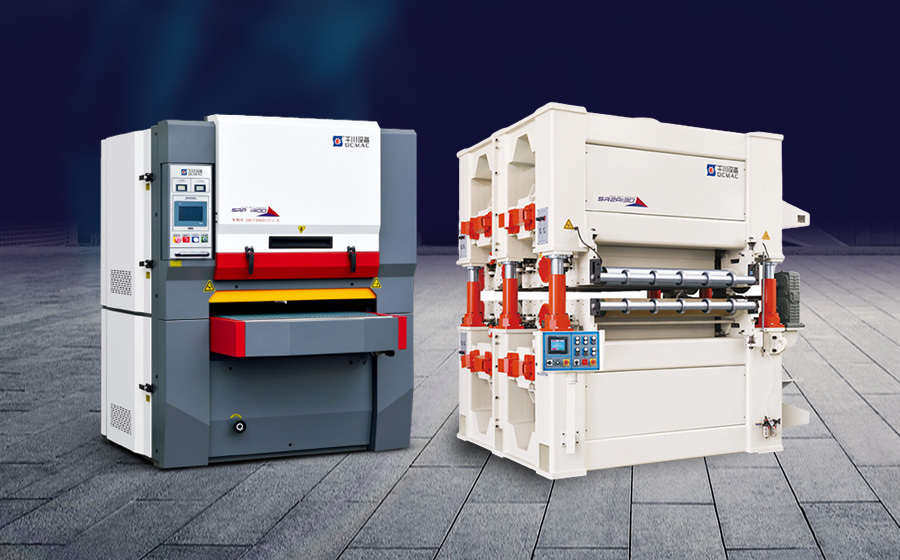
A particle board sanding machine is specifically designed to smooth out the surfaces of particle board and other similar materials. These machines typically feature powerful motors and advanced sanding technology, allowing them to remove imperfections, rough edges, and prepare surfaces for final finishes. When selecting a sanding machine, consider factors such as motor power, sanding speed, and the type of sanding belts or pads compatible with the machine. A robust motor will ensure consistent performance, while adjustable sanding speeds can accommodate different project requirements.
One of the primary benefits of using a particle board sanding machine is the time efficiency it offers. Manual sanding can be labor-intensive and time-consuming, especially for larger projects. By automating this process, you can save valuable time, allowing your team to focus on other critical aspects of production. Additionally, a machine provides a uniform finish that is often difficult to achieve through manual methods, resulting in higher quality products.
For optimal use, it's essential to maintain your particle board sanding machine regularly. This includes cleaning the sanding belts or pads to prevent dust buildup, checking for wear and tear, and ensuring that all parts are functioning smoothly. A well-maintained machine not only performs better but can also extend its lifespan, providing you with dependable service for years to come.
Moreover, investing in a particle board sanding machine can improve safety in your workshop. While manual sanding poses risks such as hand injuries or repetitive strain, a machine can eliminate many of these hazards. Ensure that your staff is trained on the proper use of the machine and adheres to all safety guidelines to minimize risks further.
Finally, don't forget to consider the space and layout of your workshop when integrating a particle board sanding machine. Ensure that there is adequate ventilation, as sanding can produce fine dust particles that are hazardous to health. Also, make sure that the machine is easily accessible for both operators and maintenance personnel.
In conclusion, a particle board sanding machine can transform your woodworking operations, providing efficiency, quality, and safety. By choosing the right machine, maintaining it properly, and training your staff, you can maximize its benefits and elevate your production standards. Embrace the capabilities of modern sanding technology and watch your projects reach new heights of excellence.
Related News
A Comparative Review of Popular Thickness Sanding Machines in the Market
A Comparative Review of Popular Thickness Sanding Machines in the Market Introduction to Thickness Sanding Machines Thickness sanding machines play a crucial role in woodworking, allowing craftsmen to achieve smooth finishes on wood surfaces. These machines are designed to remove material from the surface of the wood, ensuring uniformity in thickness. In this article, we will explore the top thick
Essential Guide to Sanding Equipment for Paint Sanding: Enhancing Your Finishing Process
When it comes to paint sanding, the right sanding equipment can significantly impact the quality of your finish and the efficiency of your workflow. Understanding the various types of sanding equipment for paint sanding can help professionals make informed decisions, streamline processes, and achieve superior results. Sanding equipment primarily includes hand-held tools and machines designed to sm

QingDao QianChuan Woodworking Machinery Co., Ltd.
Tel: 400-008-0088
mailbox: sales@qianchuanshebei.cn
Add: No.10, 3Rd Wanan Road, Shibei District, Qingdao, P.R.C
Copyright©2023 QingDao QianChuan Woodworking Machinery Co., Ltd. Seo