
-
About UsQingdao Qianchuan Woodworking Machinery Co. Ltd (Qianchuan for short) was founded in 1992,which is a modern professional enterprise and gathers designing, manufacturing and selling woodworking machineries.

-
-
NewsQingdao Qianchuan Woodworking Machinery Co. Ltd (Qianchuan for short) was founded in 1992,which is a modern professional enterprise and gathers designing, manufacturing and selling woodworking machineries.


News Center
Mastering the Art of Particle Board Sanding: Essential Insights for Professionals
Release time:
2026-03-21 14:00
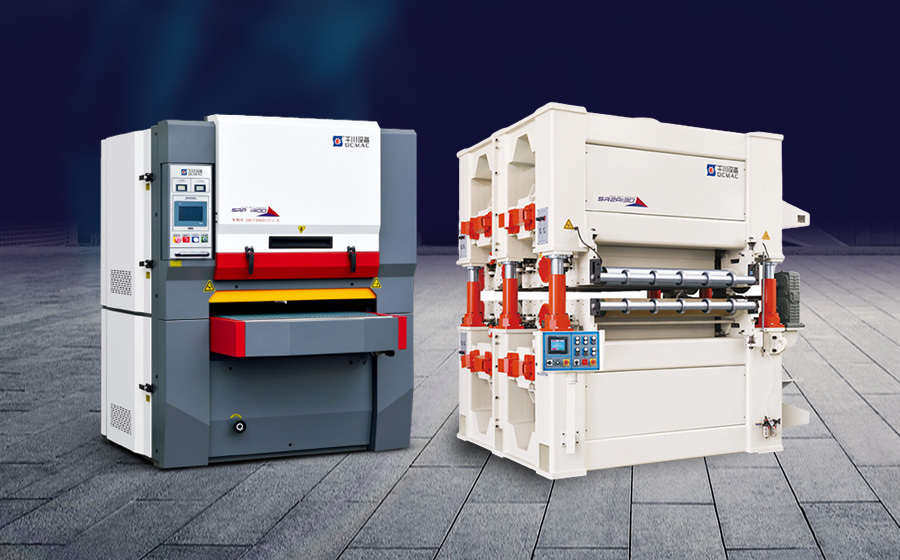
When considering the use of a particle board sanding machine, it is crucial to understand the different types available on the market. Machines can vary significantly in terms of size, capacity, and functionality. Some machines are designed for high-volume production, while others may cater to smaller, more specialized jobs. By identifying the specific needs of your operation, you can select a machine that best fits your production requirements.
One key factor in the effective use of particle board sanding machines is the choice of sanding materials. The grit size of the sandpaper is critical; coarser grits are suitable for initial sanding to remove imperfections, while finer grits are necessary for obtaining a smooth finish. Utilizing the correct grit sequence not only extends the lifespan of the sanding material but also ensures a superior finish on the particle board surfaces.
Furthermore, maintaining your particle board sanding machine is vital for consistent performance. Regular maintenance checks, such as inspecting the sanding belts, adjusting the machine settings, and cleaning dust accumulation, can greatly improve the machine's longevity and performance. Ensuring that the machine is properly calibrated can also prevent uneven sanding, which can lead to further processing issues down the line.
Moreover, it’s essential to train operators on the best practices for using sanding machines. Operators should understand the importance of safety measures while working with these machines to avoid accidents. Training programs that focus on proper machine usage, safety protocols, and troubleshooting can empower your workforce and enhance operational safety.
In addition, consider the environmental impact of your sanding process. Implementing dust collection systems can not only improve air quality in your workspace but also protect your machinery from dust build-up, which can impede performance.
Lastly, staying updated with technological advancements in particle board sanding machines can provide a competitive edge. Newer machines often come equipped with features that enhance precision, efficiency, and ease of use, making them a worthwhile investment for any manufacturing operation.
In conclusion, mastering the effective use of particle board sanding machines can significantly improve your production processes. By focusing on machine selection, maintenance, operator training, and technological advancements, you can elevate your manufacturing capabilities and achieve superior results.
Related News
A Comparative Review of Popular Thickness Sanding Machines in the Market
A Comparative Review of Popular Thickness Sanding Machines in the Market Introduction to Thickness Sanding Machines Thickness sanding machines play a crucial role in woodworking, allowing craftsmen to achieve smooth finishes on wood surfaces. These machines are designed to remove material from the surface of the wood, ensuring uniformity in thickness. In this article, we will explore the top thick
Essential Guide to Sanding Equipment for Paint Sanding: Enhancing Your Finishing Process
When it comes to paint sanding, the right sanding equipment can significantly impact the quality of your finish and the efficiency of your workflow. Understanding the various types of sanding equipment for paint sanding can help professionals make informed decisions, streamline processes, and achieve superior results. Sanding equipment primarily includes hand-held tools and machines designed to sm

QingDao QianChuan Woodworking Machinery Co., Ltd.
Tel: 400-008-0088
mailbox: sales@qianchuanshebei.cn
Add: No.10, 3Rd Wanan Road, Shibei District, Qingdao, P.R.C
Copyright©2023 QingDao QianChuan Woodworking Machinery Co., Ltd. Seo