
-
About UsQingdao Qianchuan Woodworking Machinery Co. Ltd (Qianchuan for short) was founded in 1992,which is a modern professional enterprise and gathers designing, manufacturing and selling woodworking machineries.

-
-
NewsQingdao Qianchuan Woodworking Machinery Co. Ltd (Qianchuan for short) was founded in 1992,which is a modern professional enterprise and gathers designing, manufacturing and selling woodworking machineries.


News Center
Essential Insights into Particle Board Sanding Machines for Efficient Manufacturing
Release time:
2026-05-30 11:30
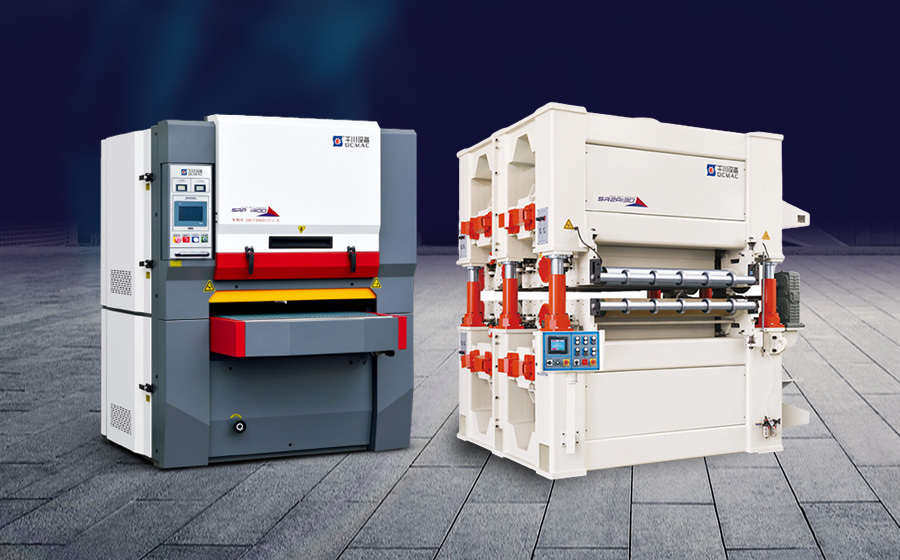
A particle board sanding machine typically utilizes a combination of abrasive materials and mechanical components to achieve a fine surface finish. The machine operates by moving the particle board through a series of sanding belts or discs that apply uniform pressure and speed. This ensures that the surface is evenly sanded, reducing the risk of uneven textures that can occur with manual sanding or less advanced equipment.
One of the primary advantages of using a particle board sanding machine is the efficiency it brings to the manufacturing process. Automation allows for quicker processing times, which is crucial in meeting production deadlines. Additionally, these machines are capable of sanding multiple sheets of particle board simultaneously, further increasing throughput. This efficiency not only boosts productivity but also minimizes labor costs, as fewer operators are needed to achieve the same output.
Moreover, the precision offered by particle board sanding machines ensures high-quality finishes that meet the stringent requirements of modern woodworking projects. An even surface is essential for subsequent steps, such as painting, veneering, or laminating. Inadequate sanding can lead to imperfections that affect adhesion and overall aesthetics. Therefore, investing in quality sanding machinery can significantly improve the final product quality and customer satisfaction.
When selecting a particle board sanding machine, it's important to consider features such as the type of sanding mechanism, speed settings, and the machine's adaptability to various board sizes. Advanced models may also include dust collection systems that help maintain a clean working environment and comply with safety regulations. This not only protects workers but also enhances the longevity of the machinery by reducing wear and tear caused by dust accumulation.
In summary, particle board sanding machines are an invaluable asset in the manufacturing and woodworking industries. They enhance efficiency, ensure high-quality finishes, and reduce labor costs, making them a worthwhile investment for any operation focused on producing superior particle board products. Understanding their functionality and benefits can lead to better decision-making when it comes to equipment investment and operational practices. By integrating advanced sanding technology, manufacturers can stay competitive in a rapidly evolving market.
Related News
A Comparative Review of Popular Thickness Sanding Machines in the Market
A Comparative Review of Popular Thickness Sanding Machines in the Market Introduction to Thickness Sanding Machines Thickness sanding machines play a crucial role in woodworking, allowing craftsmen to achieve smooth finishes on wood surfaces. These machines are designed to remove material from the surface of the wood, ensuring uniformity in thickness. In this article, we will explore the top thick
Essential Guide to Sanding Equipment for Paint Sanding: Enhancing Your Finishing Process
When it comes to paint sanding, the right sanding equipment can significantly impact the quality of your finish and the efficiency of your workflow. Understanding the various types of sanding equipment for paint sanding can help professionals make informed decisions, streamline processes, and achieve superior results. Sanding equipment primarily includes hand-held tools and machines designed to sm

QingDao QianChuan Woodworking Machinery Co., Ltd.
Tel: 400-008-0088
mailbox: sales@qianchuanshebei.cn
Add: No.10, 3Rd Wanan Road, Shibei District, Qingdao, P.R.C
Copyright©2023 QingDao QianChuan Woodworking Machinery Co., Ltd. Seo