
-
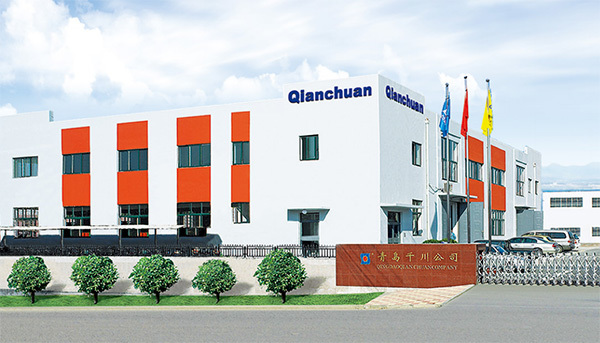
About UsQingdao Qianchuan Woodworking Machinery Co. Ltd (Qianchuan for short) was founded in 1992,which is a modern professional enterprise and gathers designing, manufacturing and selling woodworking machineries.
-
-
NewsQingdao Qianchuan Woodworking Machinery Co. Ltd (Qianchuan for short) was founded in 1992,which is a modern professional enterprise and gathers designing, manufacturing and selling woodworking machineries.


News Center
Improving Particle Board Surface Finishing with More Consistent Sanding
Release time:
2026-09-29 14:00
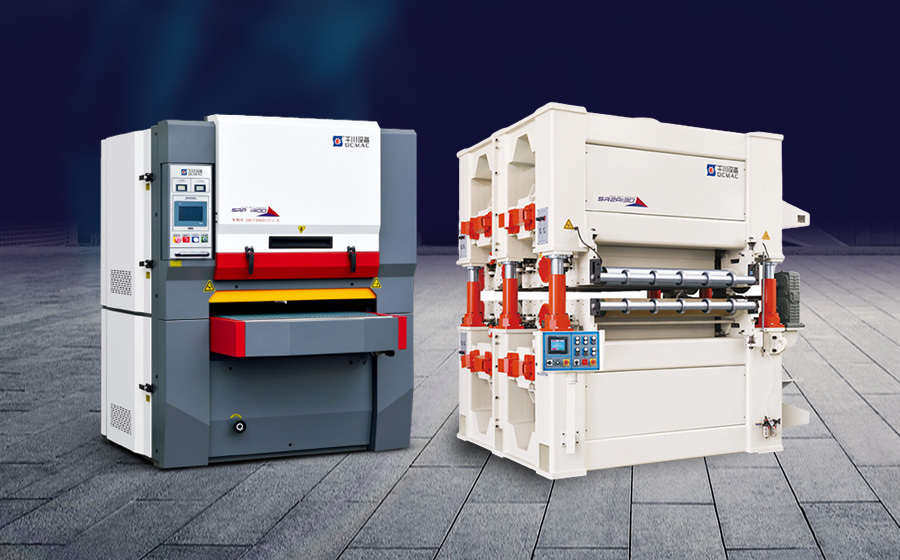
In particle board manufacturing, sanding is an important step for improving surface quality before coating, laminating, veneering, or other finishing processes. A stable particle board sanding machine can help manufacturers achieve a more uniform surface while maintaining an efficient production rhythm. Compared with relying heavily on manual sanding, mechanical processing provides better consistency across large batches and helps reduce differences between individual boards.
Why Particle Board Sanding Requires Consistency
Particle board is manufactured from wood particles bonded together under controlled processing conditions. Although the board can provide a practical and versatile panel material, its surface still needs appropriate treatment before many finishing operations. Small differences in thickness, surface flatness, or sanding quality can become more noticeable during subsequent coating or decorative processes.
For manufacturers, the challenge is not simply removing material from the surface. The sanding process needs to create a suitable and consistent surface condition without causing unnecessary material loss. When production volumes increase, maintaining this balance manually becomes more difficult.
A dedicated sanding machine can make the process more stable by providing controlled mechanical sanding across the working surface. This allows manufacturers to organize sanding as a repeatable production step instead of treating every board as an individual manual task.
Supporting Uniform Panel Surfaces
One of the main functions of a particle board sanding machine is to improve surface uniformity. During production, differences in the board surface can affect how later materials are applied. Paint, decorative layers, veneers, laminates, and other finishes generally require a relatively consistent base.
Mechanical sanding helps reduce uneven areas and creates a more predictable surface for subsequent processing. For manufacturers handling large quantities of particle board, this repeatability can be especially valuable because the same processing requirements need to be maintained from one batch to another.
Consistent sanding also makes it easier for production teams to establish standard operating procedures. Instead of depending primarily on the experience and physical condition of individual workers, the sanding stage can become a more controlled part of the manufacturing workflow.
Improving Production Efficiency
Another important consideration is production efficiency. Manual sanding can require considerable time when large panels need to be processed repeatedly. Operators may also need to inspect surfaces continuously and repeat sanding in areas that do not meet the required condition.
A mechanical sanding process changes this workflow. Boards can be processed in a more organized manner, reducing repetitive manual operations and allowing workers to focus on material handling, inspection, finishing preparation, and other production tasks.
For factories producing furniture panels, interior panels, cabinet components, and other wood-based products, this can help create a smoother connection between different stages of production. Sanding no longer needs to become a bottleneck between board preparation and final surface treatment.
Reducing Common Manufacturing Problems
Surface inconsistency is one of the practical problems manufacturers need to control. If different boards receive different levels of sanding, subsequent finishing operations may produce visibly different results. This can increase inspection requirements and create additional rework.
Another problem is excessive manual intervention. When sanding depends heavily on workers, production efficiency can vary according to workload and operating conditions. Repeated manual processing may also make it more difficult to maintain the same standard throughout a large order.
A properly organized mechanical sanding process addresses these challenges by emphasizing repeatability. It helps manufacturers establish a clearer relationship between board preparation and downstream finishing, making the overall production process easier to manage.
Applications in Panel Processing
Particle board is widely used in furniture and interior applications, so surface preparation is closely connected with the requirements of downstream processing. After sanding, panels may continue to processes such as coating, painting, laminating, veneering, or decorative finishing.
For example, a furniture manufacturer may process large quantities of particle board for cabinet doors and side panels. Before applying a decorative surface, the boards need to present a suitable and consistent base. A stable sanding stage can help prepare these panels for the next process.
In another application, a panel manufacturer may need to process different batches of boards according to changing production schedules. Mechanical sanding provides a repeatable processing method that can be integrated into a broader workflow, helping operators maintain consistent surface preparation even when production volume changes.
Helping Manufacturers Control Material and Labor Costs
Production cost is not determined only by equipment purchase price. Material waste, labor requirements, rework, production interruptions, and inconsistent finishing can all influence the final cost of a panel.
An efficient sanding process can contribute to cost control by reducing unnecessary manual operations and helping manufacturers manage surface preparation more consistently. When fewer boards require repeated correction, production teams can spend less time handling rework.
At the same time, consistent processing can help manufacturers make better use of downstream finishing materials. A predictable surface provides a more stable foundation for later operations, which can support more consistent finishing results.
Building a More Organized Production Workflow
Modern panel manufacturing increasingly depends on process coordination rather than isolated individual operations. Cutting, forming, sanding, coating, laminating, inspection, and packaging all need to work together to maintain production efficiency.
A particle board sanding machine can serve as an important part of this workflow. Its role is not limited to surface treatment; it also helps connect the preparation stage with subsequent finishing operations.
When sanding is organized as a standardized production process, manufacturers can establish clearer quality-control points. Operators can inspect boards before and after sanding, identify abnormal surface conditions, and make adjustments according to production requirements.
A Practical Choice for High-Volume Panel Production
For manufacturers working with continuous or large-batch particle board production, stable sanding performance can have a direct influence on production organization. The goal is not simply to sand a panel, but to create a repeatable surface preparation process that supports later manufacturing stages.
By improving surface consistency, reducing repetitive manual work, supporting downstream finishing, and helping control rework, mechanical sanding can contribute to a more efficient panel-processing workflow.
As demand for furniture and interior panels continues to require consistent appearance and processing quality, manufacturers need equipment that fits into their actual production processes. A well-organized sanding stage provides a practical way to improve panel preparation while creating a more stable foundation for coating, laminating, veneering, and other finishing operations.
Related News
Enhancing Efficiency in Particle Board Processing with Advanced Sanding Machines
Particle board sanding machines are an essential tool in the woodworking industry, particularly for professionals who prioritize precision and quality in their projects. These machines are specifically designed to enhance the surface finish of particle boards, ensuring that the end product meets the high standards required in modern manufacturing. One of the primary advantages of using a particle
The Environmental Impact of Ecological Board Sanding Machines Explained: A Comprehensive Overview
The Environmental Impact of Ecological Board Sanding Machines Explained Table of Contents 1. Introduction to Ecological Board Sanding Machines 2. Sustainable Practices in the Manufacturing Process 3. Technological Advancements and Their Environmental Benefits 4. Eco-Friendly Materials Used in Sanding Machines 5. Energy Efficiency: Reducing Carbon Footprint 6. Waste Managem
Mastering Multilayer Board Sanding Machines: A Comprehensive Guide
In the realm of manufacturing and processing machinery, multilayer board sanding machines play a pivotal role in achieving high-quality surface finishes on various materials. These machines are specifically designed to handle multilayer boards, which are often used in the production of advanced electronic components and furniture. Understanding how to effectively operate and maintain these machine

QingDao QianChuan Woodworking Machinery Co., Ltd.
Tel: 400-008-0088
mailbox: sales@qianchuanshebei.cn
Add: No.10, 3Rd Wanan Road, Shibei District, Qingdao, P.R.C
Copyright©2023 QingDao QianChuan Woodworking Machinery Co., Ltd. Seo