
-
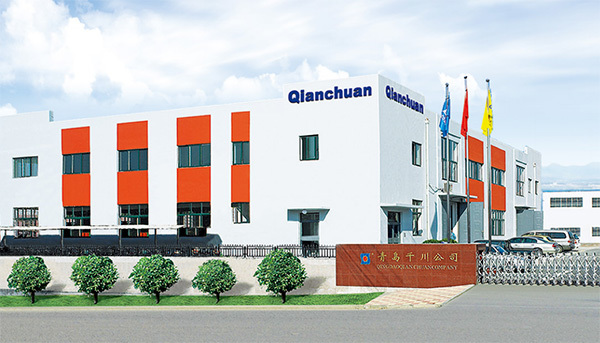
About UsQingdao Qianchuan Woodworking Machinery Co. Ltd (Qianchuan for short) was founded in 1992,which is a modern professional enterprise and gathers designing, manufacturing and selling woodworking machineries.
-
-
NewsQingdao Qianchuan Woodworking Machinery Co. Ltd (Qianchuan for short) was founded in 1992,which is a modern professional enterprise and gathers designing, manufacturing and selling woodworking machineries.


News Center
Multilayer Board Sanding Machine for Precise Thickness Control and Smooth Panel Finishing
Release time:
2026-10-27 15:59
1. Improving Surface Quality in Multilayer Board Production
A multilayer board sanding machine is an essential piece of equipment for manufacturers seeking consistent surface quality, accurate thickness control, and efficient processing of multilayer boards and ecological boards. During board production, uneven surfaces, overlapping veneer areas, warped panels, and inconsistent thickness can affect the appearance and quality of finished products. A suitable sanding machine helps address these challenges by improving surface flatness and preparing panels for subsequent processes such as laminating, coating, and furniture assembly.
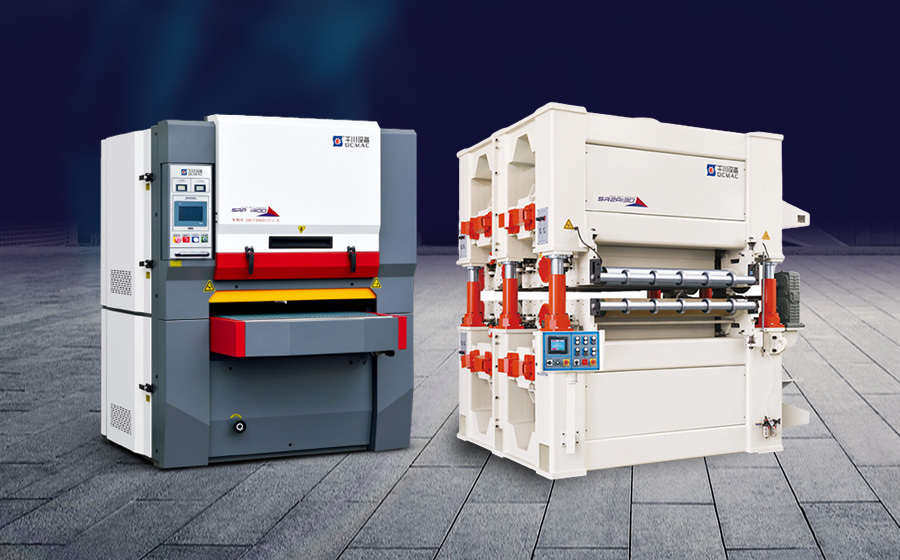
As furniture manufacturing continues to demand stable quality and efficient production, sanding equipment must deliver reliable processing performance while accommodating different board specifications. The SR13A sanding machine is designed for ecological boards and multilayer boards, helping manufacturers establish a more controlled and repeatable sanding process. Its combination of mechanical design, feeding control, and intelligent operation supports production environments where consistent finishing is important.
2. Precise Thickness Setting for Smoother Finishing
Thickness control is a key factor in multilayer board processing. Variations in board thickness or surface flatness can create difficulties during downstream operations, resulting in additional adjustment, rework, or material waste. The SR13A uses an inclined sanding frame to preset the thickness of furniture panels and melamine ecological boards. This design helps improve sanding flatness and surface smoothness while effectively addressing uneven areas caused by overlapping veneer.
The machine also incorporates a proximity pressure roller and a precision grinding shoe. These components help address board warping and improve sanding performance at the leading and trailing edges of panels. For manufacturers processing multilayer boards in batches, this design can help reduce inconsistent contact during sanding and support more uniform finishing results.
Better surface preparation is particularly valuable when boards will receive decorative coatings or laminated finishes. A smoother and more consistent surface helps create a suitable foundation for subsequent processing, allowing manufacturers to manage product appearance and quality more effectively.
3. Reliable Sanding Structure and Mechanical Stability
Stable mechanical performance is essential for continuous industrial production. The SR13A sanding roller uses a weld-free manufacturing process and non-impact bearing installation to support higher rotational accuracy. These features help maintain stable sanding action and reduce unwanted variation during operation.
The machine body is constructed from heavy-duty steel plate and undergoes aging treatment after welding. This robust structure helps improve operational stability and provides support for demanding production conditions. A mechanical anti-rebound structure is also incorporated to enhance operational safety during processing.
For factories operating long production shifts, dependable machine construction can help reduce concerns about instability and support more predictable production scheduling. Regular maintenance, appropriate abrasive belt selection, and timely inspection remain important for maintaining sanding quality and equipment service life.

4. Efficient Feeding and Intelligent Control
Material feeding has a direct influence on sanding consistency and production efficiency. The SR13A uses high-power, frequency-controlled feeding to deliver smooth and stable material movement. Adjustable feeding speed allows manufacturers to coordinate processing with different production requirements and material characteristics.
The machine uses a PLC and touch screen as its primary control system. Operators can access visualized operating information, while fault self-diagnosis helps identify potential equipment issues. Clear on-screen information and straightforward controls make daily operation easier to manage, helping reduce unnecessary adjustment time and supporting more organized production workflows.
The machine has a processing width of 60–1,300 mm, a processing thickness range of 3–100 mm, and a minimum processing length of 900 mm. Its abrasive belt speed is 28 m/s, while the feeding speed ranges from 10 to 60 m/min. These specifications help manufacturers evaluate whether the machine matches their panel dimensions and production targets.
5. Practical Applications in Furniture and Ecological Board Manufacturing
Multilayer boards and ecological boards are commonly used in furniture components, cabinet panels, decorative boards, and other interior applications. These products often require controlled surface sanding to improve flatness and prepare the material for subsequent finishing.
For example, a furniture factory producing cabinet doors may encounter differences in surface flatness between panels. If these differences remain after sanding, the finished coating may reveal visible defects, requiring extra inspection or reprocessing. A suitable multilayer board sanding machine helps standardize the sanding stage, improving surface preparation before coating or assembly.
Another example is a board manufacturer supplying materials to several furniture producers. Different orders may require consistent thickness and surface quality across large batches. By using equipment with controlled thickness setting and stable feeding, the manufacturer can establish a more repeatable production process and simplify quality checks between batches.
Actual results depend on the board material, surface condition, abrasive belt, machine settings, and operating practices. Manufacturers should therefore match the equipment configuration to their specific production needs.
6. Addressing Common Production Challenges
Uneven sanding, veneer overlap marks, warped boards, inconsistent edge processing, and unstable material feeding can increase manufacturing costs. These issues may lead to additional manual work, unnecessary material removal, and delays in subsequent production stages.
The SR13A addresses several of these challenges through its inclined sanding frame, proximity pressure roller, precision grinding shoe, and frequency-controlled feeding system. These features help improve surface contact and processing stability, supporting more consistent sanding results. Its PLC-based controls and fault self-diagnosis also help operators monitor machine status and respond to potential issues more efficiently.
The equipment includes a vacuum airflow specification of 12,000 m³/h to support dust extraction when connected to a suitable dust collection system. Effective dust management helps maintain a cleaner working environment and supports stable sanding operations. Appropriate extraction system design and routine cleaning are still necessary to achieve effective dust control.
7. Selecting the Right Machine for Long-Term Production
When selecting a multilayer board sanding machine, manufacturers should consider board dimensions, thickness range, surface requirements, production volume, feeding speed, and compatibility with existing equipment. The required level of thickness control and the types of veneer or ecological boards being processed should also be evaluated before purchase.
A well-matched sanding machine can help manufacturers reduce repeated manual corrections, improve surface consistency, and make better use of labor and materials. By combining a stable mechanical structure, controlled feeding, and accessible operating controls, the SR13A provides a practical option for factories processing ecological boards and multilayer panels.
For furniture manufacturers and board-processing businesses focused on dependable finishing quality, selecting suitable sanding equipment is an important step toward improving production efficiency. With appropriate machine settings, regular maintenance, and a well-organized workflow, manufacturers can build a more consistent sanding process and support their long-term production goals.
Related News
The Essential Guide to Floating Thickness Sanding Machines: Optimizing Woodworking Efficiency
Floating thickness sanding machines are essential tools in the woodworking and manufacturing industries, designed to deliver precise sanding and finishing on a variety of materials. These machines are particularly effective in achieving uniform thickness and surface smoothness, making them invaluable for professionals engaged in high-quality production. The primary function of a floating thickness
A Comparative Review of Popular Thickness Sanding Machines in the Market
A Comparative Review of Popular Thickness Sanding Machines in the Market Introduction to Thickness Sanding Machines Thickness sanding machines play a crucial role in woodworking, allowing craftsmen to achieve smooth finishes on wood surfaces. These machines are designed to remove material from the surface of the wood, ensuring uniformity in thickness. In this article, we will explore the top thick

QingDao QianChuan Woodworking Machinery Co., Ltd.
Tel: 400-008-0088
mailbox: sales@qianchuanshebei.cn
Add: No.10, 3Rd Wanan Road, Shibei District, Qingdao, P.R.C
Copyright©2023 QingDao QianChuan Woodworking Machinery Co., Ltd. Seo