
-
About UsQingdao Qianchuan Woodworking Machinery Co. Ltd (Qianchuan for short) was founded in 1992,which is a modern professional enterprise and gathers designing, manufacturing and selling woodworking machineries.

-
-
NewsQingdao Qianchuan Woodworking Machinery Co. Ltd (Qianchuan for short) was founded in 1992,which is a modern professional enterprise and gathers designing, manufacturing and selling woodworking machineries.


News Center
Mastering the Art of Particle Board Sanding Machines: A Comprehensive Guide
Release time:
2026-08-28 11:50
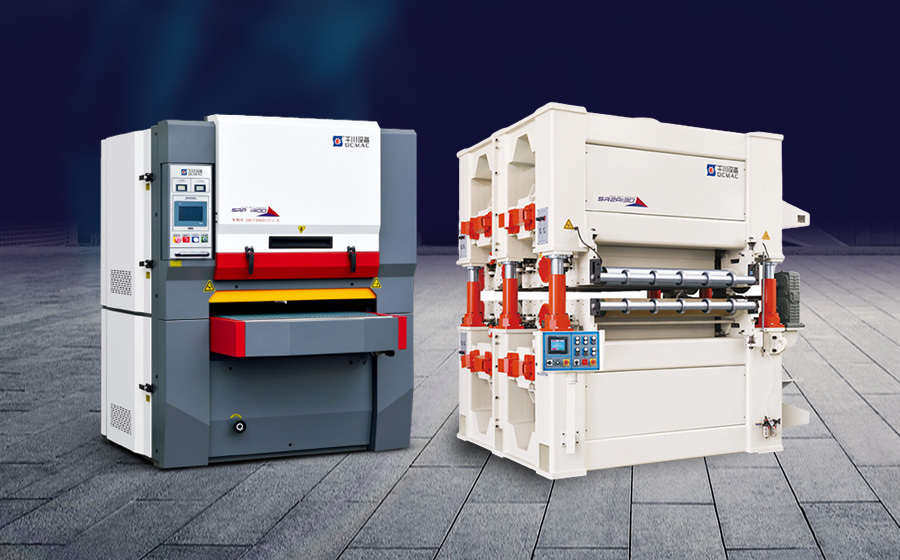
One of the primary advantages of using a particle board sanding machine is its ability to deliver uniform finishes across large surface areas. Unlike manual sanding, which can be inconsistent and time-consuming, these machines provide an efficient solution for smoothing out imperfections. They typically utilize abrasive materials, such as sandpaper or sanding pads, that can be replaced easily, allowing for various grit levels to achieve the desired finish.
Particle board sanding machines come in different types, including belt sanders, disc sanders, and oscillating sanders. Each type has its unique application, so it's important to select the right machine based on your specific needs. For instance, belt sanders are excellent for large, flat surfaces, while disc sanders are ideal for edge finishing and contouring. Oscillating sanders, on the other hand, provide versatility for detailed work.
In addition to their effectiveness, modern particle board sanding machines often come equipped with advanced features that enhance their performance. Some machines include dust collection systems, which help maintain a clean working environment by minimizing airborne dust particles. This feature is particularly beneficial for ensuring compliance with safety regulations and improving overall air quality in the workshop.
Furthermore, automation has become a significant trend in the design of particle board sanding machines. Many models now incorporate programmable settings, allowing users to set specific parameters for their sanding tasks. This not only improves consistency but also increases productivity, as operators can focus on other tasks while the machine handles the sanding process.
Regular maintenance of particle board sanding machines is crucial for ensuring longevity and optimal performance. Keeping the abrasive materials in good condition, inspecting belts for wear and tear, and regularly cleaning dust collection systems are all vital practices that can extend the lifespan of your equipment.
In conclusion, investing in a particle board sanding machine is a strategic move for manufacturers aiming to enhance the quality of their products. By understanding the various types, features, and maintenance requirements of these machines, businesses can optimize their operations, improve product quality, and stay competitive in the industry. Whether you're a seasoned professional or just starting in the woodworking business, mastering the use of particle board sanding machines will undoubtedly elevate your production capabilities.
Related News
The Essential Guide to Floating Thickness Sanding Machines: Optimizing Woodworking Efficiency
Floating thickness sanding machines are essential tools in the woodworking and manufacturing industries, designed to deliver precise sanding and finishing on a variety of materials. These machines are particularly effective in achieving uniform thickness and surface smoothness, making them invaluable for professionals engaged in high-quality production. The primary function of a floating thickness
A Comparative Review of Popular Thickness Sanding Machines in the Market
A Comparative Review of Popular Thickness Sanding Machines in the Market Introduction to Thickness Sanding Machines Thickness sanding machines play a crucial role in woodworking, allowing craftsmen to achieve smooth finishes on wood surfaces. These machines are designed to remove material from the surface of the wood, ensuring uniformity in thickness. In this article, we will explore the top thick

QingDao QianChuan Woodworking Machinery Co., Ltd.
Tel: 400-008-0088
mailbox: sales@qianchuanshebei.cn
Add: No.10, 3Rd Wanan Road, Shibei District, Qingdao, P.R.C
Copyright©2023 QingDao QianChuan Woodworking Machinery Co., Ltd. Seo