
-
About UsQingdao Qianchuan Woodworking Machinery Co. Ltd (Qianchuan for short) was founded in 1992,which is a modern professional enterprise and gathers designing, manufacturing and selling woodworking machineries.

-
-
NewsQingdao Qianchuan Woodworking Machinery Co. Ltd (Qianchuan for short) was founded in 1992,which is a modern professional enterprise and gathers designing, manufacturing and selling woodworking machineries.


News Center
Thickness Sanding Machine: Precision Thickness Control for Efficient Woodworking Production
Release time:
2026-10-27 15:45
Improving Thickness Accuracy in Wood Processing
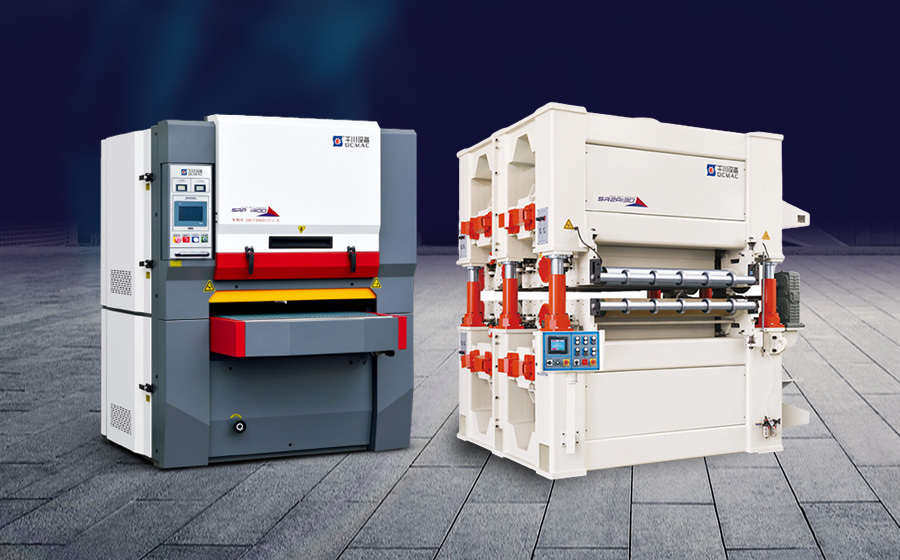
A thickness sanding machine is an important piece of equipment for woodworking manufacturers that need consistent board thickness, smooth surfaces, and reliable processing efficiency. In furniture production, panel manufacturing, and engineered wood processing, variations in thickness can affect assembly accuracy, surface quality, and the performance of subsequent manufacturing operations. A suitable sanding machine helps manufacturers control material dimensions while preparing boards for further processing.
Modern woodworking production requires more than basic surface sanding. Manufacturers must balance dimensional accuracy, processing speed, material utilization, and operational stability. A thickness-setting sanding machine addresses these requirements by combining adjustable sanding mechanisms with controlled feeding and operating systems. This approach helps businesses establish a more consistent production process and reduce dependence on repeated manual adjustments.
Designed for Different Board Processing Requirements
Different woodworking applications involve different board sizes, thicknesses, and material characteristics. The SRAP1000A-1 thickness-setting sander is designed to process workpieces with widths from 40 to 1000 mm, thicknesses from 3 to 120 mm, and lengths exceeding 610 mm. Its feeding speed ranges from 7 to 30 m/min, allowing operators to adjust processing conditions according to production requirements and material characteristics.
This processing range makes the machine suitable for a variety of board-processing tasks. Depending on the material and required finish, it can support thickness adjustment and surface sanding for wood panels and related products. By accommodating different workpiece dimensions, the machine helps manufacturers manage varied production orders without relying exclusively on separate equipment for each board size.
Key Features for Precision and Stability
Accurate sanding depth is essential when the finished board must meet specific dimensional requirements. The SRAP1000A-1 uses a dial indicator to display the vertical position of the sanding roller, with a stated lifting accuracy of 0.01 mm. This feature provides operators with a clear reference when adjusting the sanding position and helps support more controlled thickness settings.
Machine rigidity is another important factor. The load-bearing columns are fabricated from thickened rectangular tubes and undergo manual aging treatment. This construction is intended to enhance overall structural rigidity, supporting stable operation during demanding processing tasks.
At the feeding inlet, a pressure roller helps prevent boards from rebounding during operation. This feature contributes to safer material handling and helps maintain a more controlled feeding process. The machine also uses a PLC and touchscreen as its primary control components, providing visual operation, displayed operating information, and self-diagnostic fault detection. These functions make it easier for operators to monitor the machine and identify potential problems.

Supporting Efficient Production
Production efficiency depends on the coordination of processing speed, sanding performance, material feeding, and dust extraction. The SRAP1000A-1 is equipped with sanding belt drives rated at 30 kW, 22 kW, and 18.5 kW for the main sanding frames. The first and second sanding belts have specified line speeds of 21 m/s and 18 m/s, while the third belt operates at 18 m/s.
These configurations provide a technical basis for processing different materials and achieving the required surface results. Actual performance depends on board characteristics, abrasive selection, sanding depth, and feed speed. Proper adjustment helps manufacturers balance material removal with surface quality rather than pursuing speed alone.
Dust management is also essential in woodworking facilities. The machine has a specified vacuum airflow volume of 9,800 m³/h. When connected to a suitable dust collection system, this capacity can support the removal of sanding dust from the processing area. Effective extraction helps maintain a cleaner workspace and reduces the accumulation of dust around equipment.
Practical Applications in Woodworking Factories
Consider a furniture manufacturer processing panels for cabinets, wardrobes, and shelving systems. If incoming boards vary in thickness, workers may need additional sanding, repeated measurement, or manual correction before assembly. These extra steps can slow production and make it more difficult to maintain consistent product dimensions.
A thickness-setting sanding machine can help standardize the preparation process by providing adjustable sanding positions and controlled feeding. Operators can establish suitable settings for each material and production order, then monitor the results during processing. This can help reduce avoidable dimensional variation and simplify downstream operations.
Similarly, manufacturers of engineered wood panels may need to process different board specifications for different customers. A machine that accommodates a broad range of workpiece thicknesses can provide greater flexibility when scheduling production. Before selecting a machine, however, manufacturers should confirm that its working range and sanding configuration match their actual materials and finish requirements.
Addressing Common Production Challenges
Uneven board thickness, inconsistent surface quality, excessive manual adjustment, and unstable feeding are common challenges in woodworking production. These problems may result in material waste, additional labor, slower throughput, and difficulties during assembly.
A properly configured thickness sanding machine helps address these issues through adjustable sanding depth, stable machine construction, controlled feeding, and clear operating information. The combination of these features supports a more repeatable workflow and gives operators greater control over the processing process.
To achieve the expected results, manufacturers should also select appropriate abrasive belts, maintain consistent material feeding, inspect critical machine components, and establish regular maintenance procedures. Equipment performance depends on the entire production setup, not simply the machine itself.
Choosing the Right Thickness Sanding Machine
Before purchasing a thickness sanding machine, buyers should evaluate the minimum and maximum board thickness, processing width, required feed speed, target surface finish, and expected production volume. Available workshop space, dust extraction capacity, power requirements, and operator training should also be considered during installation planning.
For the SRAP1000A-1, the stated external dimensions are 2850 × 2400 × 2100 mm, and its net weight is 4,850 kg. These specifications help buyers assess installation space and equipment handling requirements. Confirming factory conditions and production needs in advance can help avoid unnecessary adjustments after delivery.
Building a More Consistent Woodworking Process
Reliable thickness control is fundamental to efficient panel processing and quality woodworking production. By combining adjustable sanding depth, a rigid machine structure, controlled feeding, and touchscreen-based operation, the SRAP1000A-1 provides a practical option for manufacturers seeking greater consistency in board preparation.
For furniture factories, panel processors, and other woodworking businesses, selecting a suitable thickness sanding machine can help improve dimensional control, streamline processing, and support stable production. Matching the equipment to the actual material range and manufacturing objectives is the key to obtaining dependable results over the long term.
Related News
The Essential Guide to Floating Thickness Sanding Machines: Optimizing Woodworking Efficiency
Floating thickness sanding machines are essential tools in the woodworking and manufacturing industries, designed to deliver precise sanding and finishing on a variety of materials. These machines are particularly effective in achieving uniform thickness and surface smoothness, making them invaluable for professionals engaged in high-quality production. The primary function of a floating thickness
A Comparative Review of Popular Thickness Sanding Machines in the Market
A Comparative Review of Popular Thickness Sanding Machines in the Market Introduction to Thickness Sanding Machines Thickness sanding machines play a crucial role in woodworking, allowing craftsmen to achieve smooth finishes on wood surfaces. These machines are designed to remove material from the surface of the wood, ensuring uniformity in thickness. In this article, we will explore the top thick

QingDao QianChuan Woodworking Machinery Co., Ltd.
Tel: 400-008-0088
mailbox: sales@qianchuanshebei.cn
Add: No.10, 3Rd Wanan Road, Shibei District, Qingdao, P.R.C
Copyright©2023 QingDao QianChuan Woodworking Machinery Co., Ltd. Seo