
-
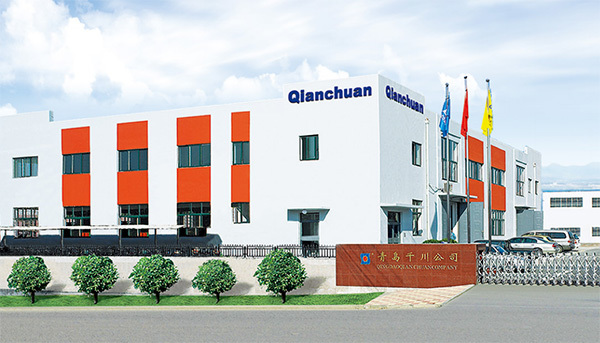
About UsQingdao Qianchuan Woodworking Machinery Co. Ltd (Qianchuan for short) was founded in 1992,which is a modern professional enterprise and gathers designing, manufacturing and selling woodworking machineries.
-
-
NewsQingdao Qianchuan Woodworking Machinery Co. Ltd (Qianchuan for short) was founded in 1992,which is a modern professional enterprise and gathers designing, manufacturing and selling woodworking machineries.


News Center
Floating Sanding Machine for Stable Thickness Control and Efficient Wood Panel Processing
Release time:
2026-09-28 10:19
A More Controlled Approach to Wood Panel Sanding
In modern woodworking production, sanding is not only about creating a smooth surface. It is also an important step for controlling panel thickness, improving flatness, and preparing materials for subsequent processing. A floating sanding machine provides a practical approach for manufacturers that need stable sanding performance while handling variations in workpiece thickness. This type of equipment is particularly relevant to solid wood furniture, composite panels, and other flat wood-based materials where consistent processing can directly influence final product quality.
The floating structure is designed to provide greater adaptability during sanding. Instead of treating every workpiece as having exactly the same thickness and surface condition, the equipment can accommodate production variations while maintaining a controlled sanding process. This makes it useful for manufacturers that need to process different panels continuously without relying entirely on manual adjustments.
Why Floating Sanding Matters
In conventional sanding operations, variations in material thickness can create challenges for production. If the processing position is not properly controlled, thicker sections may receive excessive sanding while thinner sections may not receive enough treatment. This can affect thickness consistency, flatness, surface quality, and the appearance of finished panels.
A floating sanding structure offers a more flexible way to manage these variations. The sanding system can respond to changes in the workpiece while maintaining contact with the material. This approach helps create a more stable processing condition and is particularly valuable when a production line needs to handle panels with different thickness characteristics.
For manufacturers, the benefit is not simply better sanding. It is the ability to make the sanding stage more predictable and easier to integrate into a continuous production workflow.
Supporting Thickness and Surface Processing
Thickness control is an important requirement in many woodworking applications. Furniture panels, composite boards, and other wood-based materials often need to meet specific dimensional requirements before they move to cutting, edge processing, coating, assembly, or other operations.
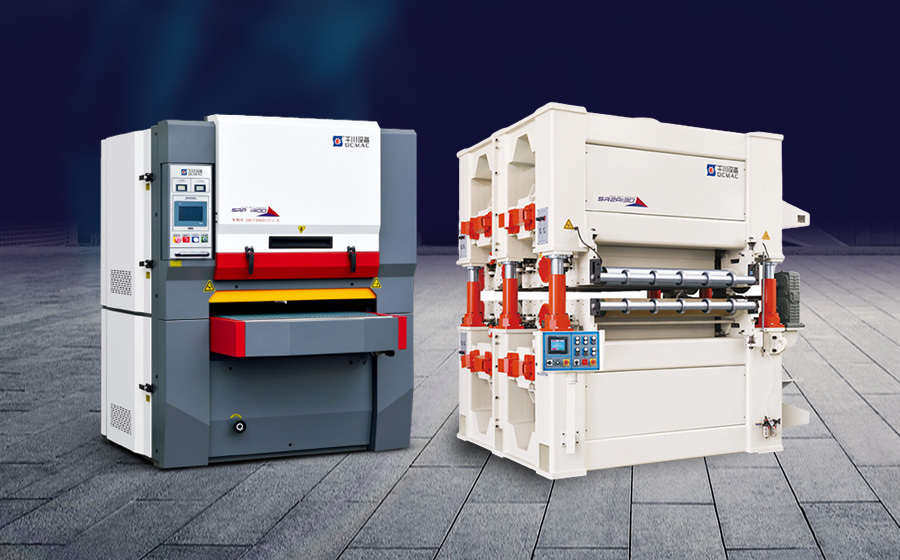
A floating thickness-setting sanding system can support this stage by combining material feeding with controlled sanding. The equipment category is designed for sanding applications where thickness accuracy and surface quality both matter. The broader equipment range includes floating thickness-setting sanding machines as well as other sanding systems for different woodworking materials.
This makes the sanding process more than a final surface treatment. It can become part of the dimensional preparation stage, helping manufacturers establish a more consistent foundation for later production.

Improving Production Consistency
Consistency becomes increasingly important as production volumes grow. A factory may process hundreds or thousands of panels during a production period, and small differences in sanding conditions can accumulate into noticeable variations.
Manual sanding and adjustment can make it difficult to maintain the same processing conditions from one workpiece to another. Operator experience, adjustment habits, feeding speed, and material differences may all influence the result.
A mechanical sanding system provides a more standardized processing method. Once the equipment is properly configured for the intended material and production requirements, panels can move through the sanding stage according to a defined process. This can reduce unnecessary variation and make quality control easier to organize.
Supporting Different Woodworking Materials
Woodworking factories rarely work with only one type of material. Depending on the product range, manufacturers may process solid wood panels, veneer products, composite boards, particleboard, MDF, and other engineered materials.
The equipment portfolio associated with floating sanding includes solutions for thickness-setting, veneer processing, new building materials, ecological boards, particleboard and MDF, as well as solid wood panels. This broader application range is important for manufacturers that want sanding equipment to fit different production requirements.
The exact processing configuration should still be selected according to the material, thickness range, surface condition, production volume, and desired finishing result. The objective is to create a sanding process that matches the actual production environment rather than applying the same settings to every material.
Reducing Repetitive Manual Work
Labor efficiency is another important concern in woodworking production. When thickness adjustment and sanding depend heavily on manual operations, workers may need to repeatedly inspect materials, adjust equipment, and handle panels.
This can increase the workload while making production speed more difficult to maintain. Mechanical sanding equipment can take over a large part of the repetitive processing work and allow operators to focus on machine monitoring, material supply, quality inspection, and production coordination.
For factories with increasing order volumes, reducing repetitive manual operations can help create a more organized production rhythm without compromising the importance of quality control.
Improving Material Feeding Stability
Material feeding is closely connected with sanding quality. If a panel moves through the equipment unevenly, the sanding result may also become inconsistent. Stable feeding therefore plays an important role in maintaining predictable processing conditions.
The wider range of woodworking sanding equipment includes variable-frequency feeding systems designed to provide smooth and stable material delivery. Other equipment configurations also use protective feeding arrangements, including mechanisms intended to reduce the risk of material rebound.
For production managers, these features can help make the relationship between feeding, sanding, and material handling more manageable.
Helping Manufacturers Solve Common Problems
One common customer pain point is inconsistent panel thickness. When materials vary significantly after earlier processing stages, later operations may become more difficult to control. A dedicated thickness-setting sanding process can help manufacturers create a more consistent dimensional basis.
Another problem is uneven surface quality. Sanding that is too aggressive can affect the material unnecessarily, while insufficient sanding may leave unwanted surface variation. A controlled mechanical process helps manufacturers establish more repeatable conditions.
A third challenge is production efficiency. Manual sanding and repeated adjustment consume time, particularly when large quantities of panels need to be processed. Introducing a dedicated sanding machine can reduce repetitive work and help maintain a continuous production sequence.
Application Case: Solid Wood Furniture Panels
Consider a furniture manufacturer producing flat solid wood panels for cabinets, tables, or other furniture components. Before assembly and finishing, the panels may need to achieve a more consistent thickness and surface condition.
The production line can place sanding after the initial preparation stage. Panels enter the machine, pass through the feeding system, and receive controlled sanding according to the required processing conditions. After sanding, they can continue to cutting, edge treatment, coating, or assembly.
This arrangement can reduce the need for workers to repeatedly perform manual thickness correction. At the same time, a more standardized sanding stage can make it easier to maintain similar processing results across larger production batches.
Application Case: Composite and Engineered Panels
Composite panels and engineered wood products can also require controlled sanding before further processing. Their production characteristics may differ from solid wood, making stable thickness and surface treatment especially important.
A floating sanding configuration can provide greater adaptability when processing workpieces with different thickness characteristics. Manufacturers can incorporate the sanding stage into their existing workflow and adjust the operating conditions according to the specific material and production requirements.
For factories producing furniture components, decorative panels, or other engineered wood products, this can help create a more organized route from raw panel preparation to final product manufacturing.
Supporting Automated Production
Woodworking factories are increasingly looking for ways to connect individual processing stages into more efficient production systems. Sanding equipment can play an important role in this transition.
A floating sanding machine can become part of a broader production workflow rather than functioning as an isolated piece of equipment. Material preparation, sanding, surface treatment, inspection, and subsequent processing can be arranged in a logical sequence.
This type of integration can help reduce unnecessary material handling and make production planning easier. It also provides manufacturers with a clearer structure for monitoring processing quality and production efficiency.
Equipment Design and Operational Reliability
Long-term equipment performance depends on more than the sanding belt or sanding roller. Machine structure, feeding components, lifting mechanisms, control systems, and safety arrangements all contribute to the overall operating experience.
The available woodworking machinery information describes high-strength machine structures, precision machining, variable-frequency conveyor drives, precision lifting mechanisms, and feeding safety devices across relevant sanding equipment. These design elements are intended to support stable operation during repeated industrial processing.
For customers, this means equipment selection should consider the complete sanding system rather than focusing on one individual component.
Creating a More Efficient Production Flow
A well-organized sanding process can improve more than surface quality. It can influence material handling, labor allocation, production scheduling, and downstream processing.
When sanding becomes a defined and controlled production stage, manufacturers can establish clearer operating standards. Workers know when panels enter the sanding process, what processing conditions are required, and which quality points need to be checked afterward.
This can make production easier to manage, particularly for factories that are moving from workshop-style manual processing toward more standardized manufacturing.
A Practical Choice for Modern Woodworking
As demand for consistent furniture panels and engineered wood products continues to develop, manufacturers need equipment that can handle production variations while maintaining stable processing conditions. Floating sanding technology provides a practical approach by combining adaptability with controlled sanding.
For customers dealing with inconsistent thickness, uneven surfaces, high manual labor requirements, or inefficient material flow, the right sanding equipment can help address these challenges as part of a broader production improvement strategy.
A floating sanding machine is therefore not simply a piece of equipment for removing material. It can serve as an important processing stage for thickness control, surface preparation, material consistency, and production efficiency. With suitable configuration and integration, it can help woodworking manufacturers build a more stable workflow and prepare panels for the next stage with greater consistency. The equipment range includes floating thickness-setting systems and other sanding solutions developed for different wood and panel applications.
Related News
Essential Guide to Sanding Equipment for Paint Sanding: Enhancing Your Finishing Process
When it comes to paint sanding, the right sanding equipment can significantly impact the quality of your finish and the efficiency of your workflow. Understanding the various types of sanding equipment for paint sanding can help professionals make informed decisions, streamline processes, and achieve superior results. Sanding equipment primarily includes hand-held tools and machines designed to sm
Multilayer Board Sanding Machine for Precise Thickness Control and Smooth Panel Finishing
Multilayer board sanding machine spots offer reliable equipment for smooth surfaces and precise thickness control.

QingDao QianChuan Woodworking Machinery Co., Ltd.
Tel: 400-008-0088
mailbox: sales@qianchuanshebei.cn
Add: No.10, 3Rd Wanan Road, Shibei District, Qingdao, P.R.C
Copyright©2023 QingDao QianChuan Woodworking Machinery Co., Ltd. Seo